Soft Stool in Dogs: When Nature Calls Differently
Every dog owner knows the situation: A regular walk, and suddenly your dog’s business becomes messy. Soft stools or diarrhea make waste collection harder—and they demand much more attention to hygiene. While firm, normal stool is relatively straightforward to pick up, soft or loose stools leave residue in the fur around your dog’s anus. It’s not just uncomfortable; it’s a hygiene concern.
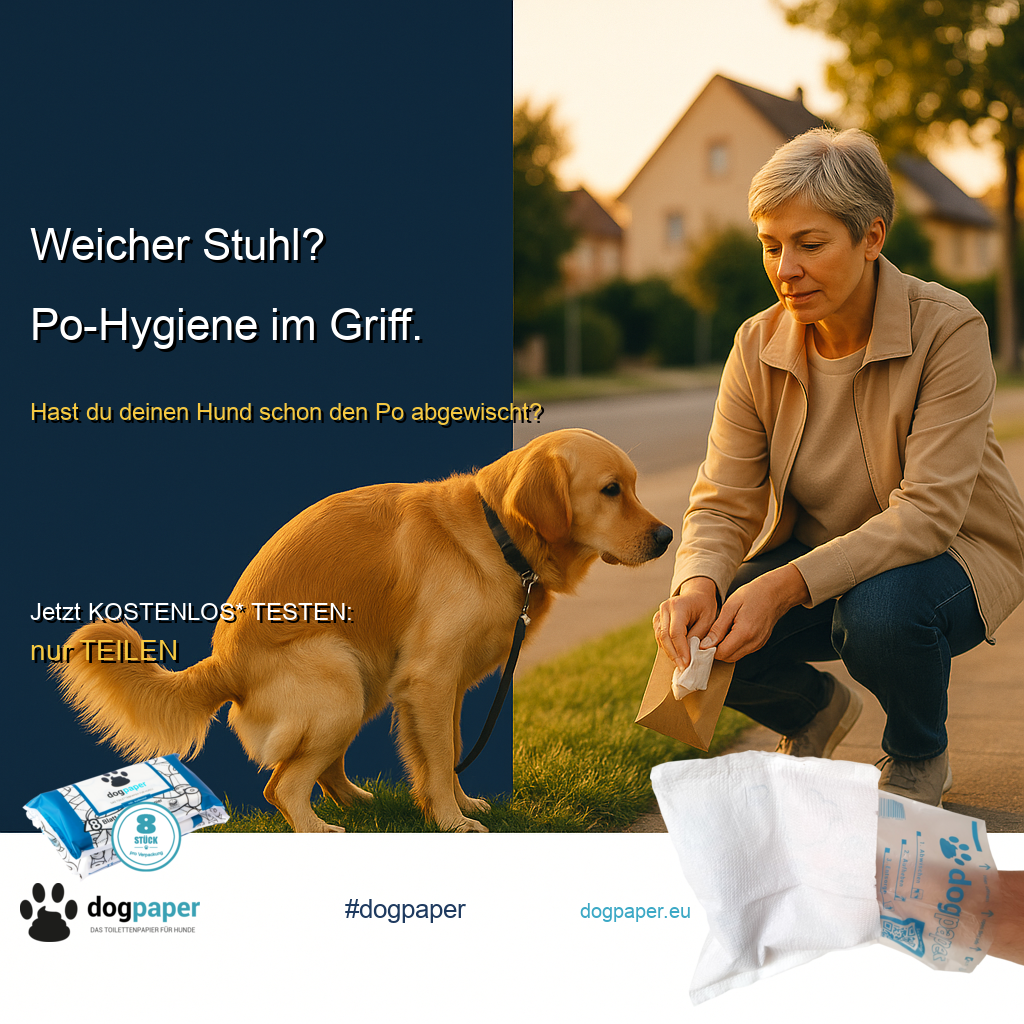
This is where dogpaper comes in. The innovative dog hygiene paper combined with an integrated waste bag offers a practical solution designed specifically for these situations. Instead of fumbling with paper towels, extra tissues, or improvised methods, you reach for dogpaper and handle rear-end cleaning and waste collection in a single, seamless motion.
The Practical Difference: Normal vs. Problematic
With firm, normal stool, everything is quick: hand in the bag, scoop, flip, dispose. Done in seconds. But with softer stools or diarrhea, you see the real difference. Fecal residue clings to the fur, especially around the anal area. Your dog then carries these deposits into your home—onto couches, beds, and carpets.
With dogpaper, you fundamentally change this process. The integrated hygiene paper lets you wipe your dog’s anus right after defecation—just as you would handle your own toilet hygiene. With softer stools, using the paper on both sides helps remove stubborn residue thoroughly. Then you collect the waste as normal—everything with one bag, no extra materials or fuss.
Health and Hygiene: Why Rear-End Cleaning Matters
This isn’t about excessive fastidiousness. Fecal residue, especially with diarrhea, poses real hygiene and health risks. Invisible pathogens—particularly roundworms—settle into fecal matter around your dog’s anus. Your dog carries these into your home, onto you, your family, and your belongings.
Science confirms it: roundworms rank among the most common parasites in dogs. Their eggs are barely visible to the naked eye. When your dog comes indoors with contaminated fur around the anus, he spreads these eggs everywhere—on beds, pillows, toys. Humans can become infected too if they ingest these eggs. A simple wipe immediately after your dog defecates dramatically reduces this risk.
With soft stools or diarrhea, this risk intensifies because contamination is more extensive. That’s why direct, on-the-spot rear-end hygiene matters more than ever—and that’s exactly what dogpaper enables.
Practical Application for Diarrhea: Step by Step
Using dogpaper is remarkably simple—and becomes a real relief when dealing with softer stools:
Step 1: Put your hand in the dogpaper bag as usual—your hand stays clean, just like with any standard waste bag.
Step 2: Before you collect the stool, gently wipe your dog’s anus with the integrated hygiene paper. For softer stools, you can use the paper on both sides for more thorough cleaning.
Step 3: Then collect the waste as normal—the paper actually helps you pick up more residue from the ground than ordinary plastic bags.
Step 4: Flip the bag inside out, tie it, and dispose. Optionally, you can flush the paper bag down the toilet—the inner plastic bag is separated and recycled.
The whole process takes barely longer than standard waste collection, yet saves you extra materials and steps.
Beyond Routine: A Win for You and Your Dog
Weekend or weekday—with dogpaper, you establish a conscious hygiene routine that benefits both your dog and your home. Especially with older dogs or those with sensitive digestive systems, soft stools happen more frequently. With dogpaper, you have a reliable system that works every time.
The best part: dogpaper is the only product of its kind worldwide. It combines hygiene paper and waste bag into one practical unit—perfectly tailored for responsible dog owners who value cleanliness and health.